
When Her Husband Found Her on the Kitchen Floor at 4am
Why chronic stress isn't a sleep problem, and what your nervous system actually needs to stand down
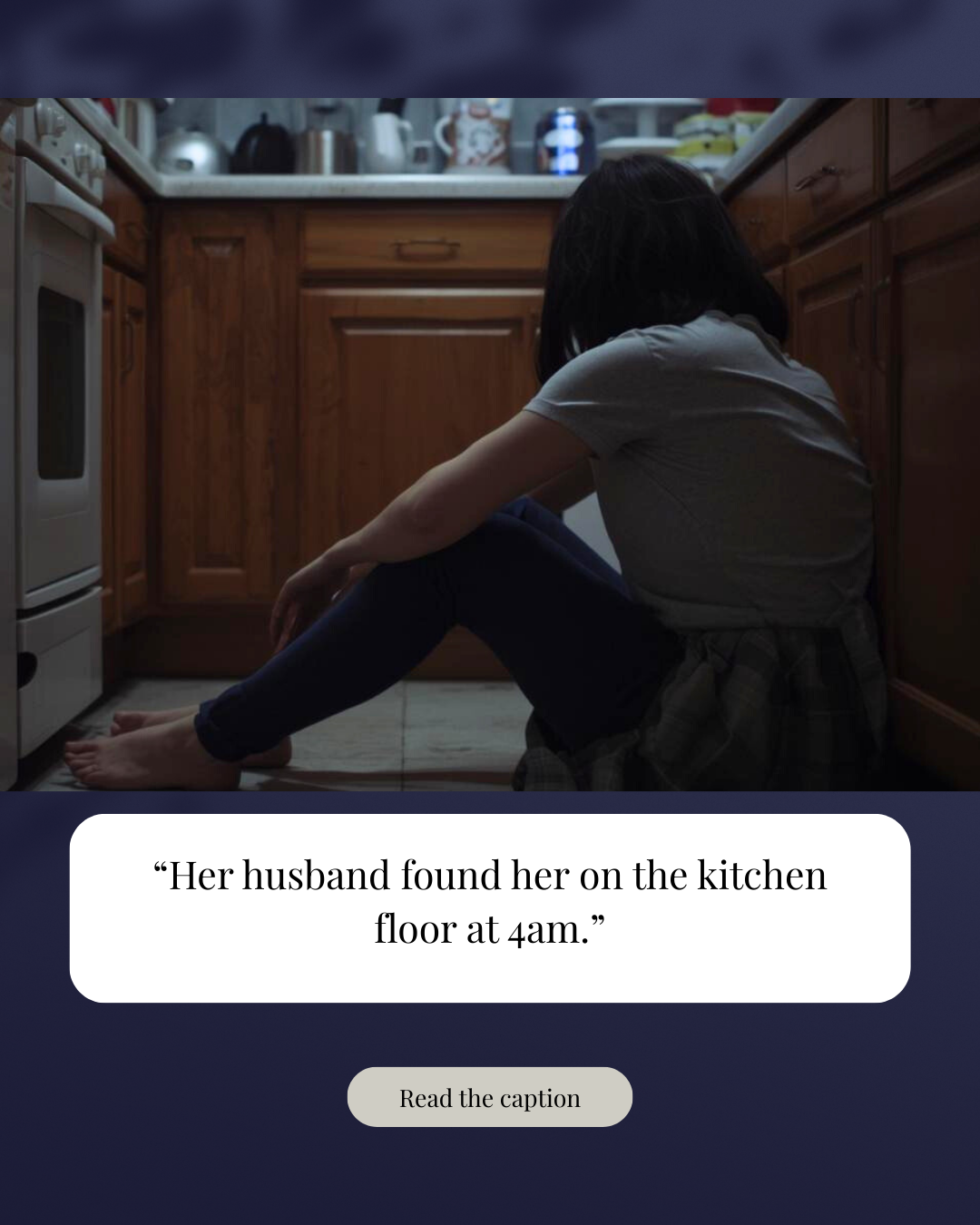
Her husband found her sitting on the kitchen floor at 4 am.
Back against the cupboards. Phone in her hand. Staring at nothing.
She wasn't crying. She was past that.
"I couldn't lie there anymore," she said quietly. "My body just won't switch off."
For three years, she hadn't slept properly. Not because she wasn't tired, she was beyond exhausted, but because rest never came. Even when her life looked "fine" on the outside. Even when she did all the things people suggest.
Supplements. Meditation apps. Breathing exercises. Doctors. Being told to slow down.
Some things helped for a while. Nothing lasted.
Because sleep deprivation wasn't the actual problem.
The Real Problem: A Nervous System That Never Got the All-Clear
Here's what most sleep advice gets wrong. It treats poor sleep as a symptom that exists in isolation.
It doesn't.
Poor sleep is usually a symptom of something else. A nervous system that's stuck in a protective state.
At night, her body stayed on guard.
Jaw clenched. Shoulders lifted. Breath shallow. Cortisol still elevated when it should have been dropping.
The bedroom hadn't become dangerous. Her nervous system simply hadn't received the signal that danger was over.
This is the critical distinction. Her nervous system wasn't broken or defective. It was doing exactly what it had learned to do over years of pressure without pause. Responsibility without relief. Being the one holding everything together.
Her body learned one rule very well: stay alert, don't drop the ball.
And once that's encoded at the nervous system level, not in her conscious mind but in her brainstem, no amount of willpower, positive thinking, or supplements can override it.
You cannot talk your way out of a biological survival response.
This is where understanding the actual physiology matters.
Why Your Conscious Mind Can't Override What Your Body Learned
Most high-performing professionals assume sleep comes down to discipline, environment, or chemistry.
It doesn't.
Sleep requires one thing: for your nervous system to genuinely believe you are safe.
When your body has spent years in a state of low-grade activation (what we call chronic sympathetic dominance), your brainstem has learned to perceive safety as dangerous.
Why? Because resting has coincided with consequences before. Or pressure never actually paused. Or you were taught that relaxation meant you weren't vigilant enough.
So at night, when you try to rest, your nervous system activates to protect you.
This activation looks like racing thoughts (the mind searching for threats), a feeling of electrical energy in the body, the physical inability to switch off, waking at 3 or 4am in a state of alert, shallow disrupted sleep even when sedated.
This is not insomnia. This is protection.
The nervous system is doing its job. It's just doing it in a context where protection is no longer necessary.
Why "Sleep Solutions" Fail (And Why This Matters)
This is why so many well-intentioned solutions don't stick.
Melatonin can make you drowsy, but drowsy isn't the same as safe. Your brain still perceives threat, so it wakes you up to stay vigilant.
Meditation can increase anxiety when the nervous system is already overwhelmed. You're asking an overprotective system to relax, and it interprets that as letting your guard down when you need it most.
Sleep medication can sedate the brain without resolving the underlying alert state. The body collapses, but the nervous system stays on guard. This is why people wake up exhausted.
Breathing exercises and vagal stimulation can help downshift in the moment, but they don't resolve the pattern. The nervous system returns to its learned state as soon as you stop.
When the body is convinced danger isn't over, these approaches become like trying to override a smoke alarm by turning down the lights. You're addressing the signal, not the threat the system believes is real.
The Distinction That Changes Everything: Regulation vs. Resolution
This is where precision matters, especially for what I call the Perfect Storm woman. You're juggling work, family, potentially neurodivergent children, ageing parents, hormonal shifts, and an invisible mental load no one else sees.
Regulation means managing symptoms while the nervous system stays on alert. You calm the system down temporarily. Relief feels good in the moment. But the underlying protection pattern remains active. So the system kicks back in.
This is why women say: "I feel better for a while, and then it comes back."
They're not failing. The nervous system is simply returning to what it learned was necessary to survive.
Resolution is different. This is where the actual change lives. Not by reliving trauma, not by analysing it endlessly, not by trying harder or coping better.
But by allowing the survival response to finish its biological cycle so the body can genuinely stand down.
When that happens, the changes are subtle but unmistakable. Sleep deepens naturally. The constant edge fades. The jaw softens without conscious effort. Women often say: "I didn't realise how braced I was" or "I finally feel like myself again."
The Vagus Nerve: Helpful, But Not Sufficient
There's been justified attention to vagal regulation lately, and yes, the vagus nerve is critical. It signals safety to the brainstem. It regulates heart rate, digestion, breath, and your capacity to rest. Physical inputs can help the nervous system downshift in the moment.
But here's the clarity that matters.
Vagal practices support regulation.
They do not resolve unresolved survival patterns.
They're supportive. Not sufficient.
If your nervous system learned over years (sometimes decades) that it needed to stay on guard, it will return to that pattern unless the original imprint is resolved.
Vagal stimulation is like turning down the heat on a stove that's been set to high for 20 years. It's nice to have relief in the moment. But you haven't changed what taught the stove to stay on high in the first place.
What Actual Resolution Requires
This is where TRTP (The Richards Trauma Process) works differently.
It doesn't rely on coping strategies, positive thinking, or conscious control.
Instead, it allows the nervous system to process and complete unresolved trauma responses without re-triggering or reliving them.
When that happens, the brainstem receives the signal: the threat you've been protecting against is over. The nervous system can finally downshift from protection mode. Sleep becomes possible not because you're forcing it, but because your body genuinely allows it.
The Woman on the Kitchen Floor
The woman her husband found on the kitchen floor wasn't weak. She wasn't failing at sleep.
Her system was exhausted from carrying more than it was designed to carry alone, and from being in a protective state for years.
Chronic stress doesn't just steal sleep. It steals patience, presence, joy, and identity.
And until the nervous system is shown, not told, that the danger has passed, rest will always feel just out of reach.
What This Means for You
If you're reading this late at night. If your body feels wired even when your life looks fine on paper. If you've tried everything and you're tired of trying.
This isn't a personal failing. It's not about doing more or trying harder.
It's about resolving what taught your body to stay on guard in the first place.
When the nervous system finally understands that it's safe (not intellectually, but somatically), rest stops being something you chase.
It becomes something your body allows.
Your body is not failing you. It's protecting you.
And protection can be gently released.
