
Burnout Is Not a Mindset Problem
It is a nervous system response to sustained unmanaged load. The distinction matters more than you think.
The most expensive myth in leadership development is that burnout is a personal resilience failure. That if you could just manage your thoughts better, set firmer boundaries, take a proper holiday, or attend one more mindfulness workshop, you would be fine.
You would not be fine. You would be a person with better coping strategies still sitting inside a system that is producing too much cortisol for your nervous system to regulate.
What You'll Learn
In this article you'll learn:
What burnout actually is from a nervous system perspective
Why burnout is not simply a mindset or resilience problem
The physiological signs of nervous system overload
Why leaders are particularly vulnerable to burnout
The difference between burnout prevention and burnout management
What Australian WHS legislation says about burnout-related psychosocial hazards
What effective burnout recovery actually requires
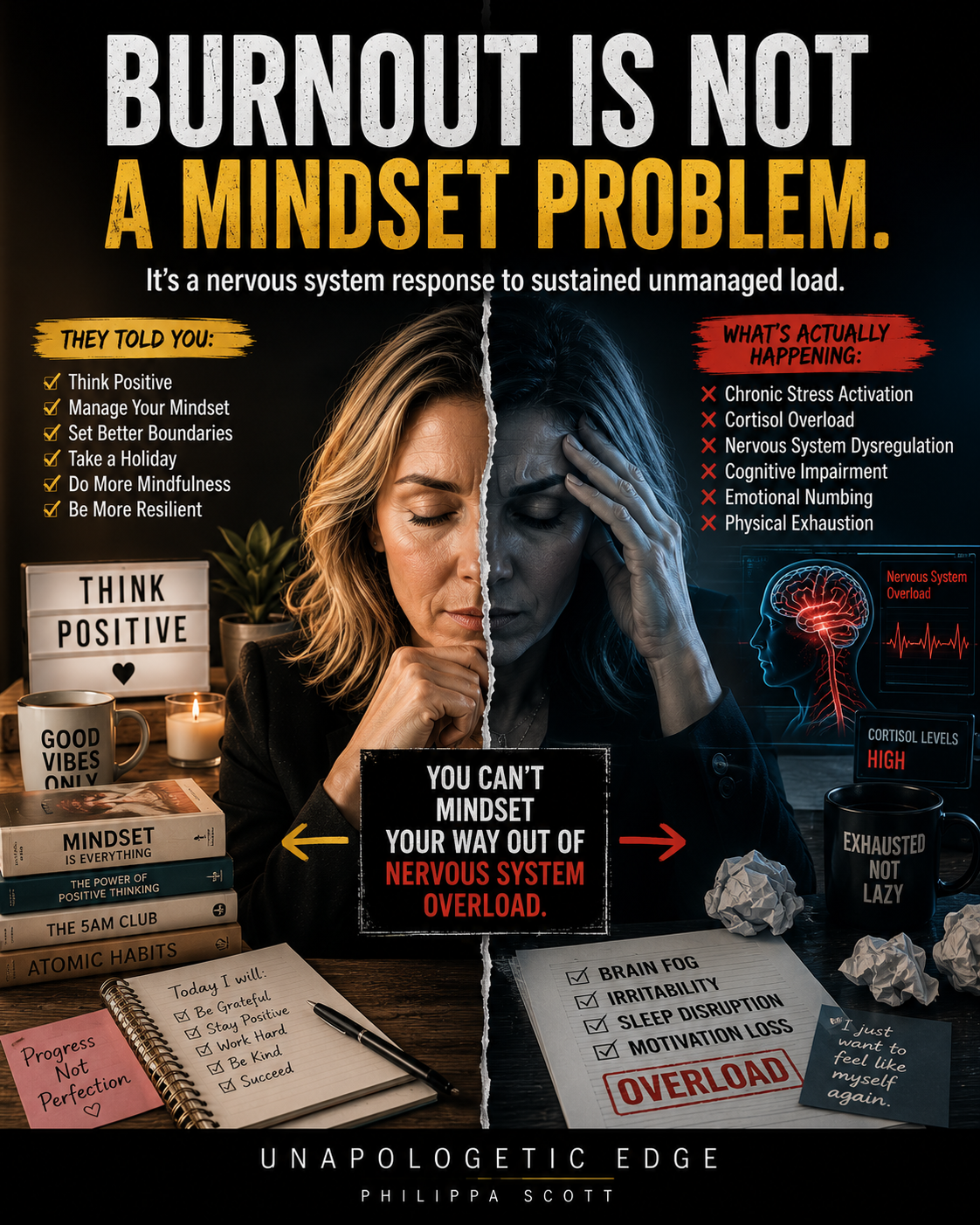
Burnout is not a resilience failure. It is a nervous system response to sustained unmanaged load that requires both individual recovery and organisational change.
What Is Burnout?
Burnout is a state of physical, emotional and cognitive exhaustion caused by prolonged exposure to unmanaged workplace stress.
According to the World Health Organisation, burnout is characterised by:
Feelings of energy depletion or exhaustion
Increased mental distance from work
Reduced professional efficacy
While burnout is classified as an occupational phenomenon rather than a medical condition, it has significant physiological impacts on the nervous system and overall health.
What Burnout Actually Is
Burnout is a physiological state, not a character flaw. It is what happens when the autonomic nervous system, the part of you that regulates your stress response, has been in a state of chronic activation for long enough that it can no longer return to baseline.
The World Health Organisation classifies burnout as an occupational phenomenon, not a medical condition, but that framing somewhat obscures what is happening in the body. The symptoms, exhaustion, cognitive impairment, emotional blunting, cynicism, physical illness, are all downstream effects of a dysregulated nervous system operating under sustained load.
The person experiencing burnout is not weak. Their system is doing exactly what it is designed to do. It prioritised survival over everything else for long enough that everything else, creativity, connection, joy, discernment, started to disappear.
Telling a burned-out person to be more resilient is like telling someone with a broken leg to walk it off. Technically possible for a short while. Catastrophic if it becomes the strategy.
Mindset vs Nervous System
Why Burnout Isn't Fixed By Thinking Differently
Mindset Approach
Think positively
Work on motivation
Push through discomfort
Improve discipline
Change your thinking
Nervous System Reality
Regulate physiological load
Reduce activation
Restore capacity
Support recovery
Change the conditions creating the strain
Burnout is often treated as a thinking problem. In reality, it is far more commonly a physiological problem. Positive thinking, motivation and discipline all have value, but they cannot override a nervous system that has been operating under sustained unmanaged load for too long.
Common Signs of Burnout
Many high-performing professionals do not recognise burnout until it is advanced.
Common signs include:
Physical Signs
Chronic fatigue
Frequent illness
Headaches
Poor sleep
Muscle tension
Emotional Signs
Cynicism
Irritability
Emotional detachment
Loss of motivation
Cognitive Signs
Brain fog
Reduced concentration
Forgetfulness
Difficulty making decisions
Behavioural Signs
Withdrawal from colleagues
Reduced productivity
Procrastination
Increased mistakes
Why High Performers Often Miss Burnout
One of the reasons burnout is difficult to identify is that high-performing professionals are often rewarded for the behaviours that eventually contribute to it.
These include:
Taking on additional responsibilities
Working longer hours
Remaining available outside work hours
Prioritising performance over recovery
Pushing through fatigue
Over time, these behaviours can become normalised even as nervous system capacity continues to decline.
Why This Matters for Leaders
Leaders are particularly vulnerable to burnout for reasons that are structural, not personal. They carry high job demands. They often have limited true autonomy despite appearing to hold power. They absorb the emotional weight of their teams. They are expected to perform certainty and composure regardless of the internal state they are actually in.
And here is the part that rarely gets named: many high-performing leaders have been running on a dysregulated nervous system for so long that they have lost the reference point for what regulated feels like. The hypervigilance, the inability to switch off, the short fuse, the creeping cynicism, these have become normal.
That is not strength. That is a system in distress that has adapted to distress as its baseline.
What Organisations Are Getting Wrong
Organisations responding to burnout with resilience training are solving for the wrong thing. They are building individual capacity to absorb more of a load that the system should be reducing.
This is not just ineffective. Under current WHS legislation, it may also be non-compliant. Job demands, low job control, poor support, and lack of role clarity are all named psychosocial hazard categories. Organisations have a legal obligation to control those hazards, not to train people to endure them.
A resilience programme that does not address the structural conditions driving burnout is, at best, a short-term bandage. At worst, it is evidence that the organisation knew people were struggling and chose to intervene at the individual level rather than the system level.
What Recovery Actually Requires
Recovery from burnout requires two things simultaneously: reducing the load at the system level, and supporting nervous system regulation at the individual level.
Neither works without the other. Structural change without individual support leaves people in a body that cannot access safety even when safety is available. Individual support without structural change puts a person back into the same conditions that caused the harm.
This is why the most effective approaches treat burnout as both a leadership health issue and an organisational design issue. Because it is both.
Frequently Asked Questions About Burnout
Is burnout a mental health condition?
The World Health Organisation classifies burnout as an occupational phenomenon rather than a medical condition. However, burnout can have significant impacts on mental health, physical health and overall wellbeing.
Is burnout caused by a lack of resilience?
No. Burnout is generally understood to result from prolonged exposure to unmanaged stress and excessive demands rather than a lack of personal resilience.
What is the difference between stress and burnout?
Stress typically involves over-engagement and heightened activation. Burnout often involves exhaustion, emotional detachment, reduced motivation and a diminished capacity to function effectively.
Can a holiday fix burnout?
A short break may provide temporary relief, but burnout recovery usually requires addressing both nervous system regulation and the workplace conditions contributing to excessive load.
What are the symptoms of burnout?
Common symptoms include fatigue, brain fog, irritability, sleep disruption, reduced motivation, cynicism, emotional exhaustion and decreased performance.
How long does burnout recovery take?
Recovery time varies depending on the severity of burnout, individual circumstances and whether workplace conditions contributing to the problem have been addressed.
Is burnout linked to psychosocial hazards?
Yes. Excessive workload, low job control, poor support, role ambiguity and inadequate organisational systems are recognised psychosocial hazards that can contribute to burnout.
Can burnout affect leaders?
Absolutely. Leaders often face high job demands, emotional labour, decision fatigue and constant responsibility, making them particularly vulnerable to burnout.
Not sure whether what you are experiencing is burnout or something that can be fixed with a long weekend? The Burnout Audit is a seven-dimension diagnostic built for high-performers who know something is off but have not had language for it yet. Find it at unapologeticedge.com/burnout-audit.
